
Assembly training
Follow the correct part and tool sequence, then repeat difficult steps. Supervisors can review missed checks before allocating time on the line.
Practise build sequences, inspect vehicle systems and explain repairs without taking a production vehicle out of use. VR supports rehearsal; interactive 3D makes hidden components easier to inspect.
Discuss your project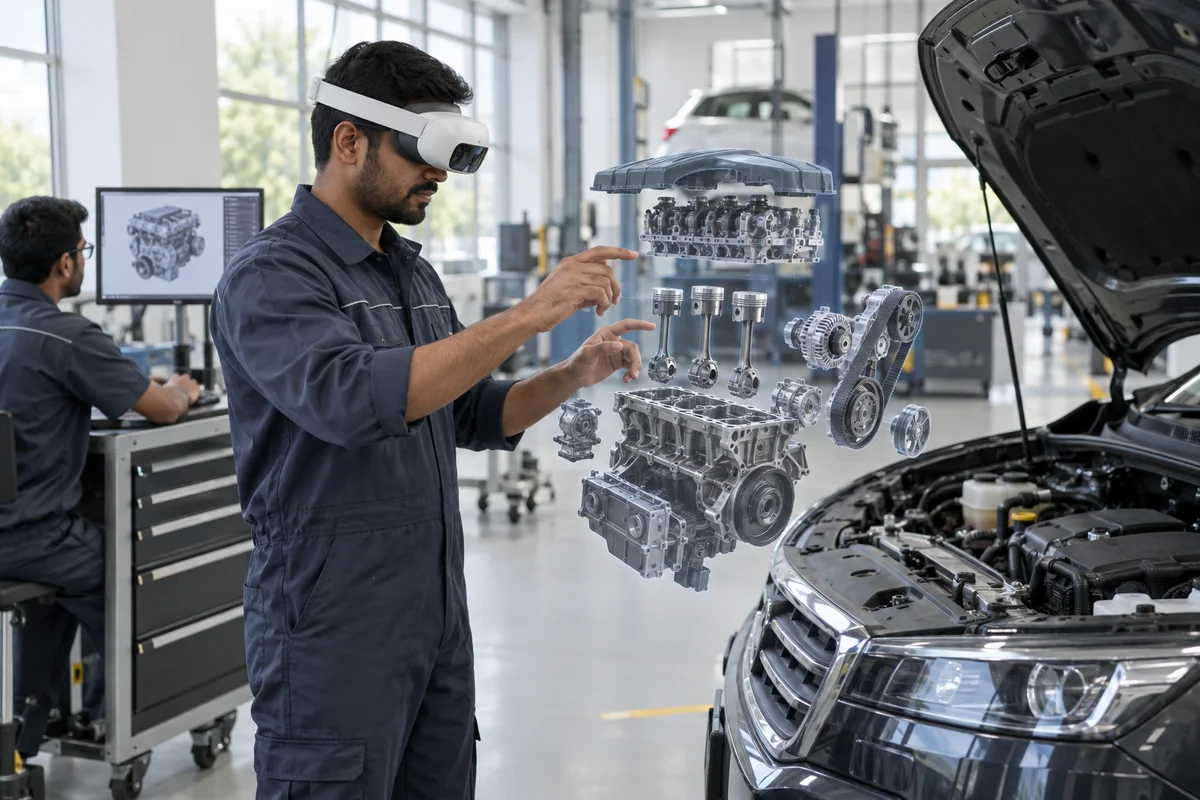
PRACTICAL USES
Vehicle availability, changing variants and complex systems make repeated demonstrations difficult.
Follow the correct part and tool sequence, then repeat difficult steps. Supervisors can review missed checks before allocating time on the line.
Explore component locations and rehearse approved isolation and inspection sequences. Give technicians a common reference before supervised work on a real vehicle.
Check access, reach and maintenance space in a digital layout before moving equipment. Finding a clash during planning avoids changing an installed line.
PUBLISHED INDUSTRY EVIDENCE
BMW Group projected this saving in 2025 from its Virtual Factory programme. This is a digital-factory planning forecast, not a measured VR training result.
Source: BMW Group, Virtual Factory (2025)External research and implementation examples. These are not measured results from Vrelab projects.
MEASURE YOUR PILOT
WHAT WE NEED FROM YOU
CAD or component references, an approved work sequence and an assembly or service expert. Start with one task that is difficult to demonstrate repeatedly.
COMMON QUESTIONS
Yes. A module can explain battery layouts, component identification and approved safety sequences. It supports preparation; it does not authorise high-voltage work or replace practical sign-off.
Choose one recurring task, such as a service inspection or assembly sequence. Compare completion time and errors before and after training using the same assessment.