Corporate orientation
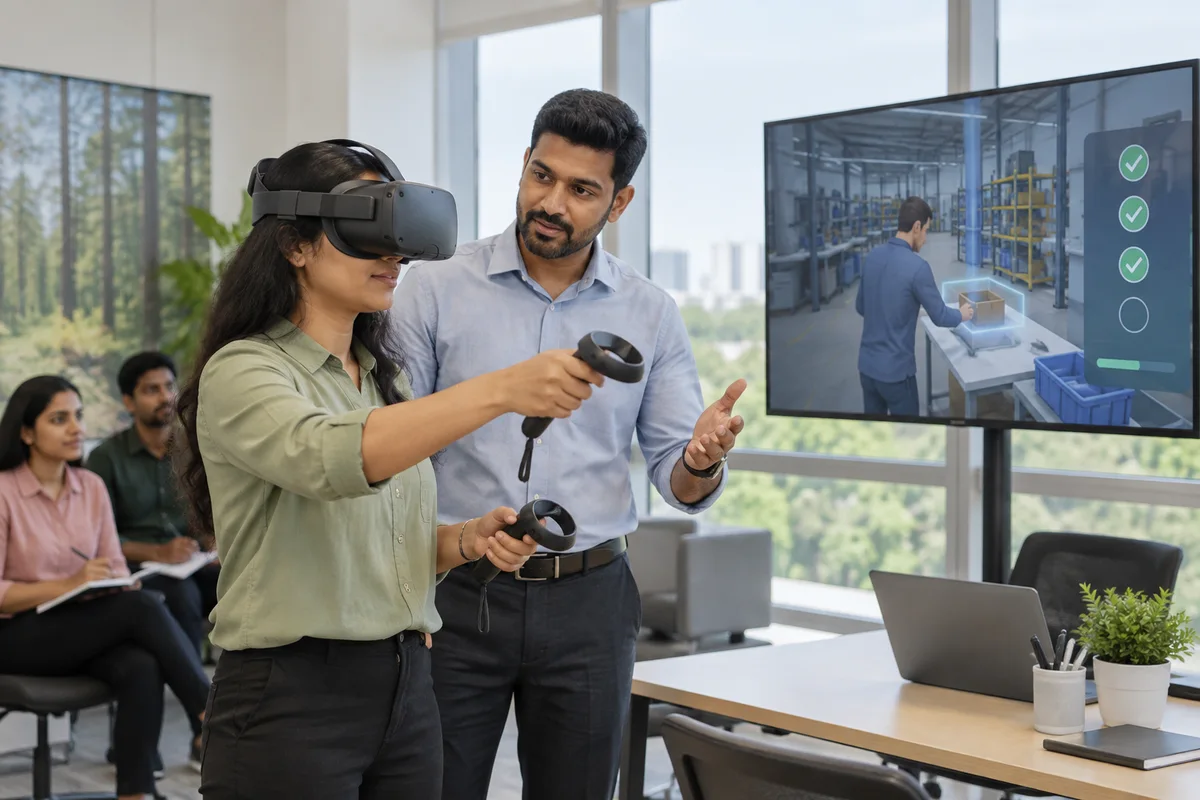
Introduce your organisation, teams and workplace through an interactive office or campus walkthrough.
VR ONBOARDING
Introduce the workplace, people, safety expectations and role-specific tasks through short interactive VR experiences.
Discuss your project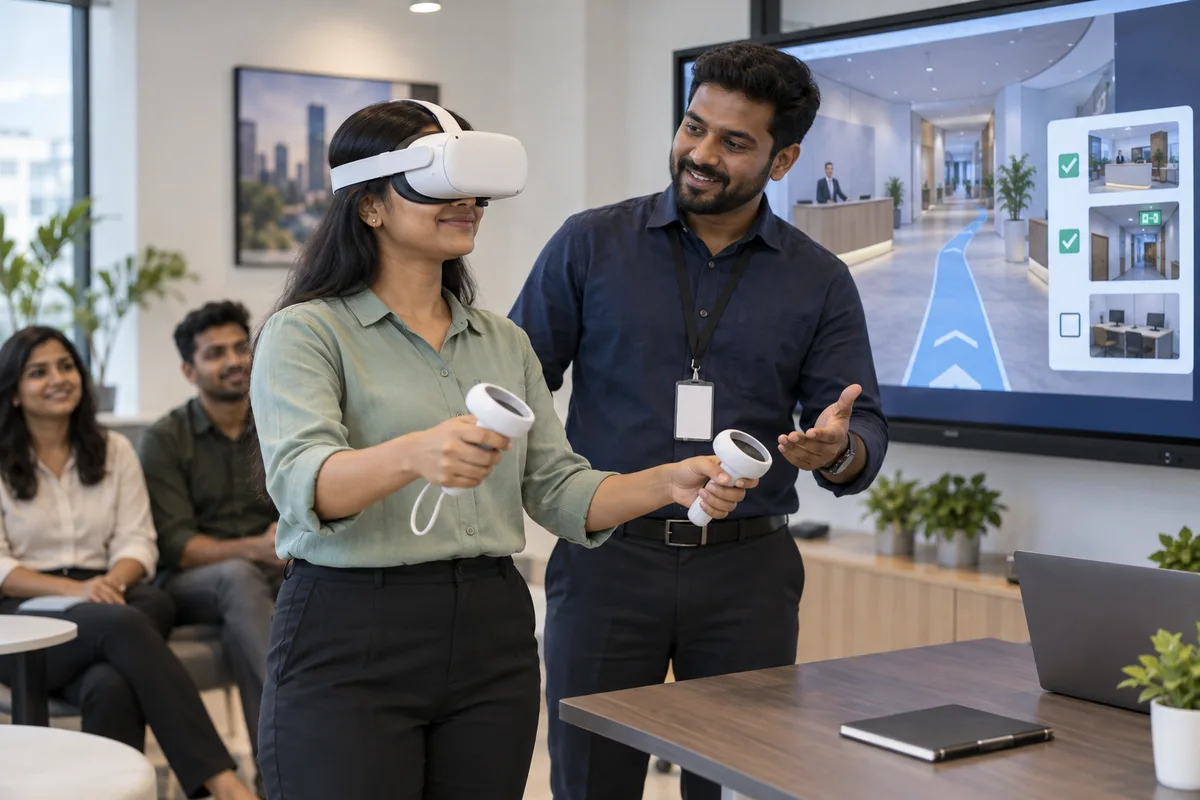
WHERE IT CAN HELP
The first weeks can combine unfamiliar spaces, equipment and procedures. A virtual introduction lets new hires find their way, make decisions and learn from mistakes before supervised work begins.
Introduce your organisation, teams and workplace through an interactive office or campus walkthrough.
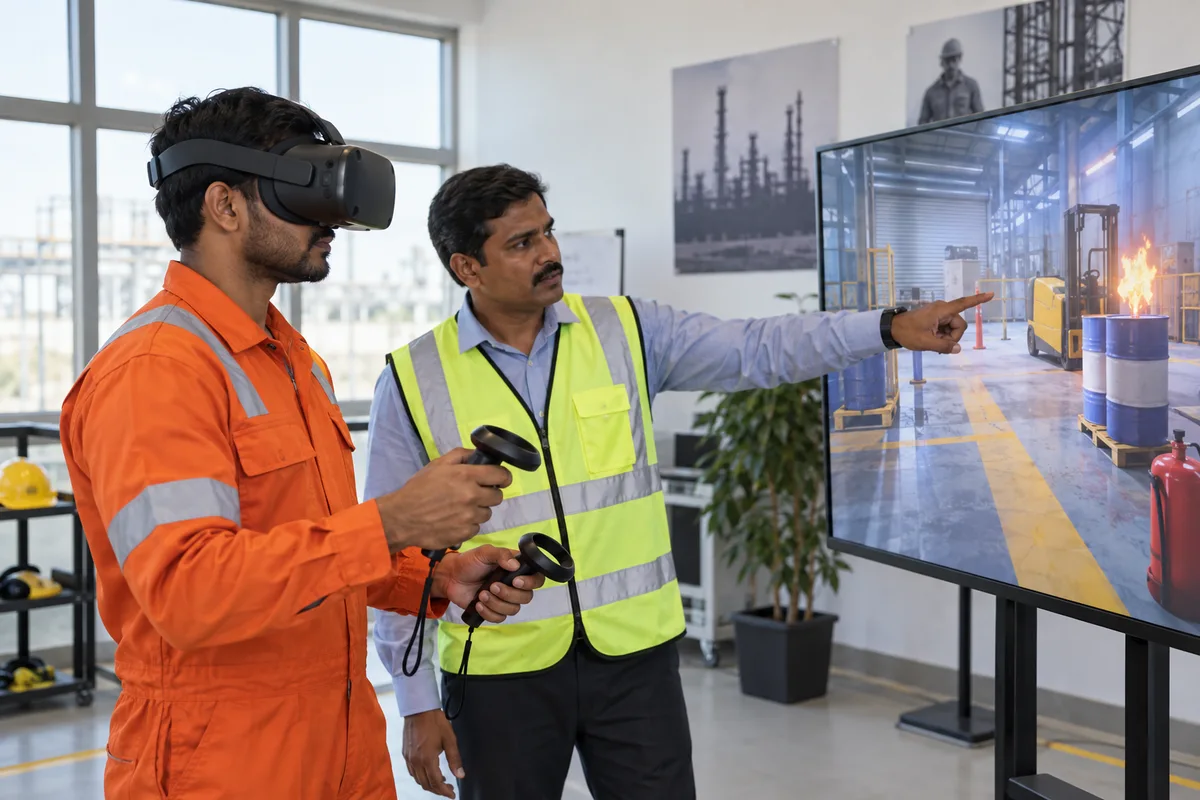
Practise finding safe routes, identifying hazards and knowing when to ask for help.
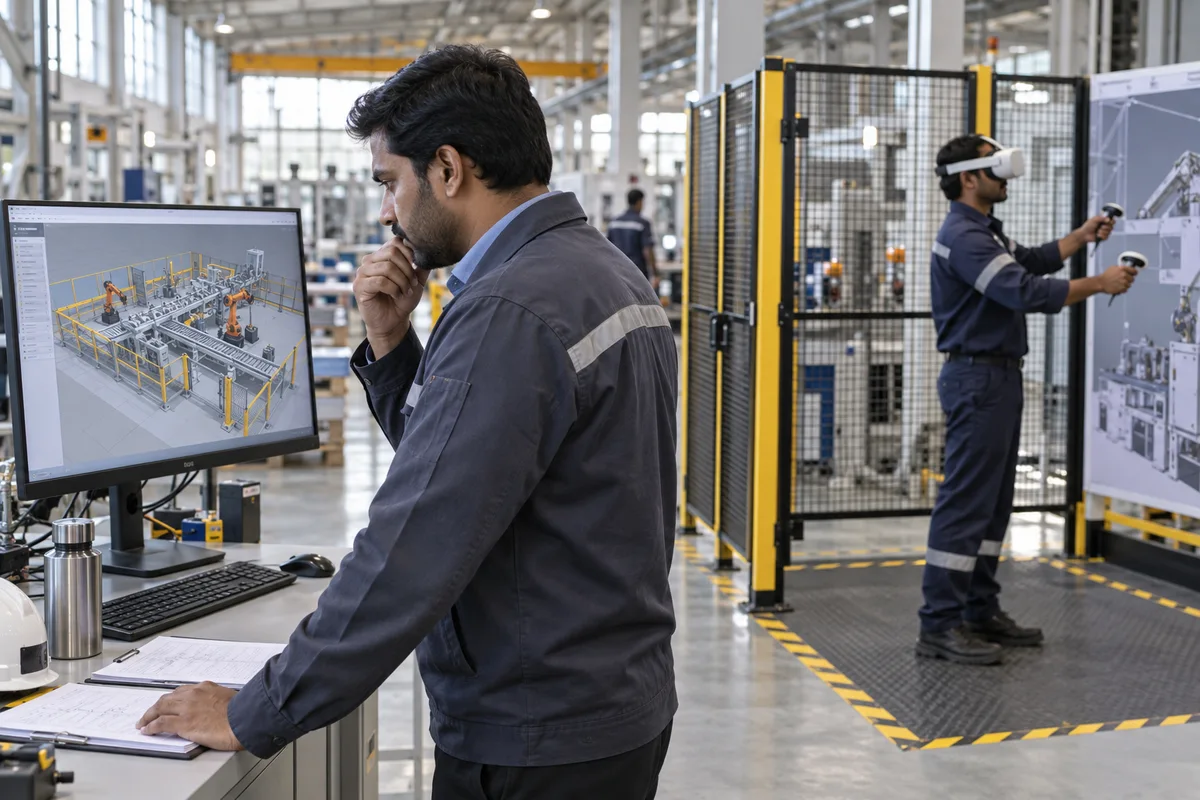
Rehearse a task, customer interaction or equipment check that matters to the new employee.
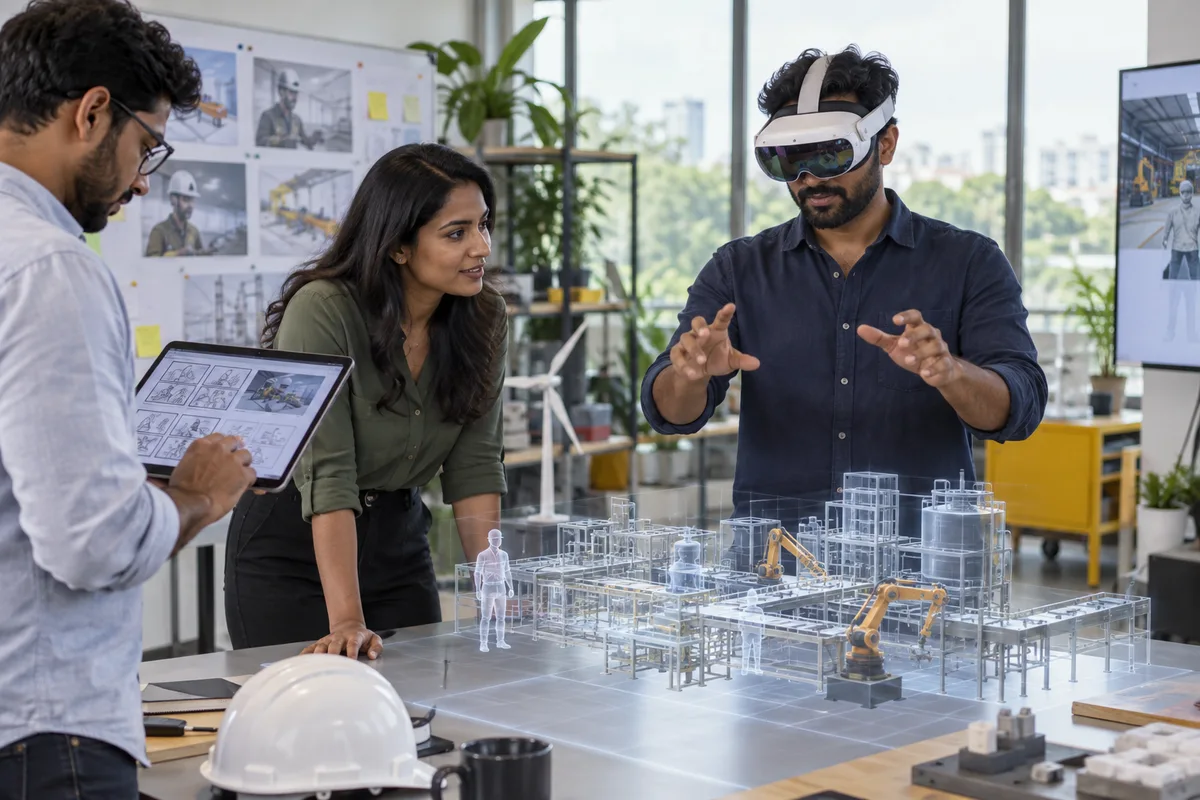
We shape the first module around your audience, approved procedure and the decisions people need to make.
Agree measures before a pilot: completion, observed readiness, early errors, trainer time and feedback from new hires.
HOW IT CAN WORK
COMMON QUESTIONS
Start with one clear learning goal and a practical rollout plan.
A new employee uses a headset to explore a simulated workplace, practise selected tasks and receive feedback before supervised work in the real setting.
No. The experience prepares the learner for a trainer-led discussion and the required practical sign-offs. Safety procedures and supervision remain with your organisation.
Yes. The first module might be an office orientation, a plant walkthrough, a customer conversation or a role-specific task. The scope follows the job and the learner.
Not always. A generic space can introduce broad ideas; a site-specific layout is useful when routes, equipment or local procedures matter. We agree the required accuracy before development.
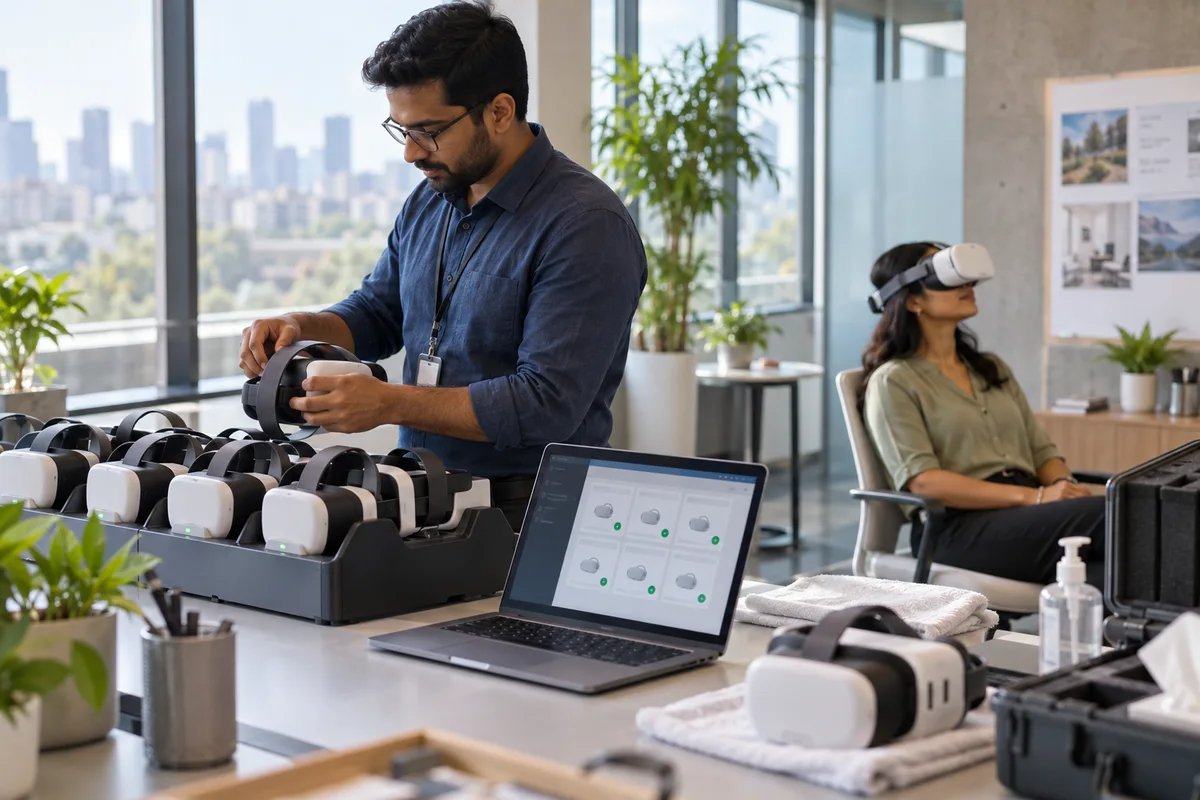
A compatible headset, a clear seated or standing training area and an instructor or facilitator for the session. Device management and offline needs are planned during the pilot.
Compare agreed measures before and after the pilot, such as task readiness, missed steps, trainer observations, early errors and learner feedback. Results depend on the scenario and rollout.