Machine and line orientation
Show employees the layout of a line, equipment locations and the relationship between work areas before an on-floor induction.
Recreate machinery, workstations and approved procedures for repeatable learning. New starters can learn the layout, operators can practise sequences, and maintenance teams can inspect component relationships before working on the real equipment.
Discuss your project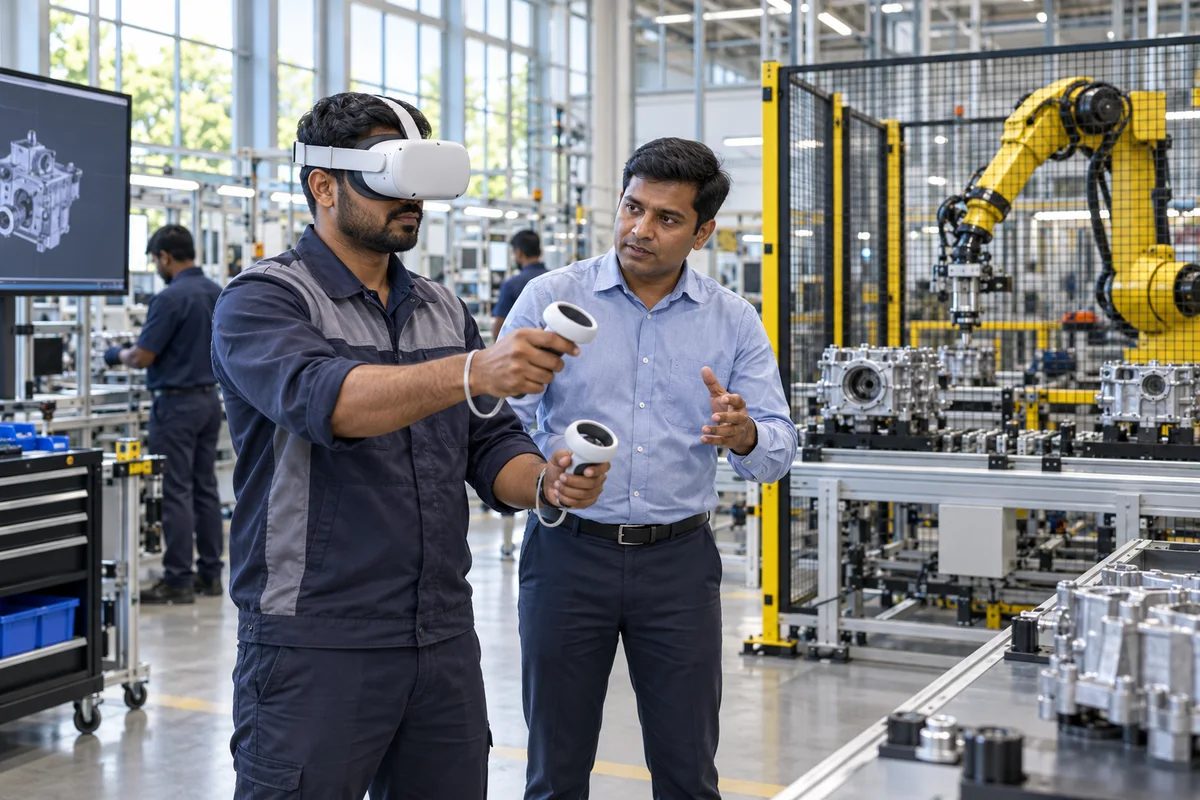
WHERE IT CAN HELP
Build modules around a particular line, task or maintenance procedure.
Show employees the layout of a line, equipment locations and the relationship between work areas before an on-floor induction.
Convert approved work instructions into labelled 3D steps, with interactive checks that make sequence and component relationships visible.
Use controlled digital situations to practise identifying hazards and discussing decisions with an instructor.
Training access to a live line may be limited. Digital content can support preparation, while practical sign-off remains part of the company’s training process.
Start with approved drawings and procedures. Assign content owners and plan revisions when equipment, layouts or instructions change.
COMMON QUESTIONS
Clear answers for planning a relevant immersive experience.
A VR module can introduce controls, checks and the sequence of a task away from production equipment. It prepares people for supervised practical training; it does not authorise independent operation.
Not always. A general model can teach transferable concepts. A site-specific replica is more useful when layouts, controls or local procedures are central to the objective.
Choose one task and compare missed steps, trainer observations, time to supervised readiness and operator feedback with your current approach.