
Warehouse induction
Learn pedestrian routes, crossing points and restricted areas in a model of the site. New starters arrive with a clearer understanding of where goods and vehicles move.
Practise picking, handoffs and safe movement through a warehouse. VR can introduce the operation before floor access; AR can guide a picker through the real task.
Discuss your project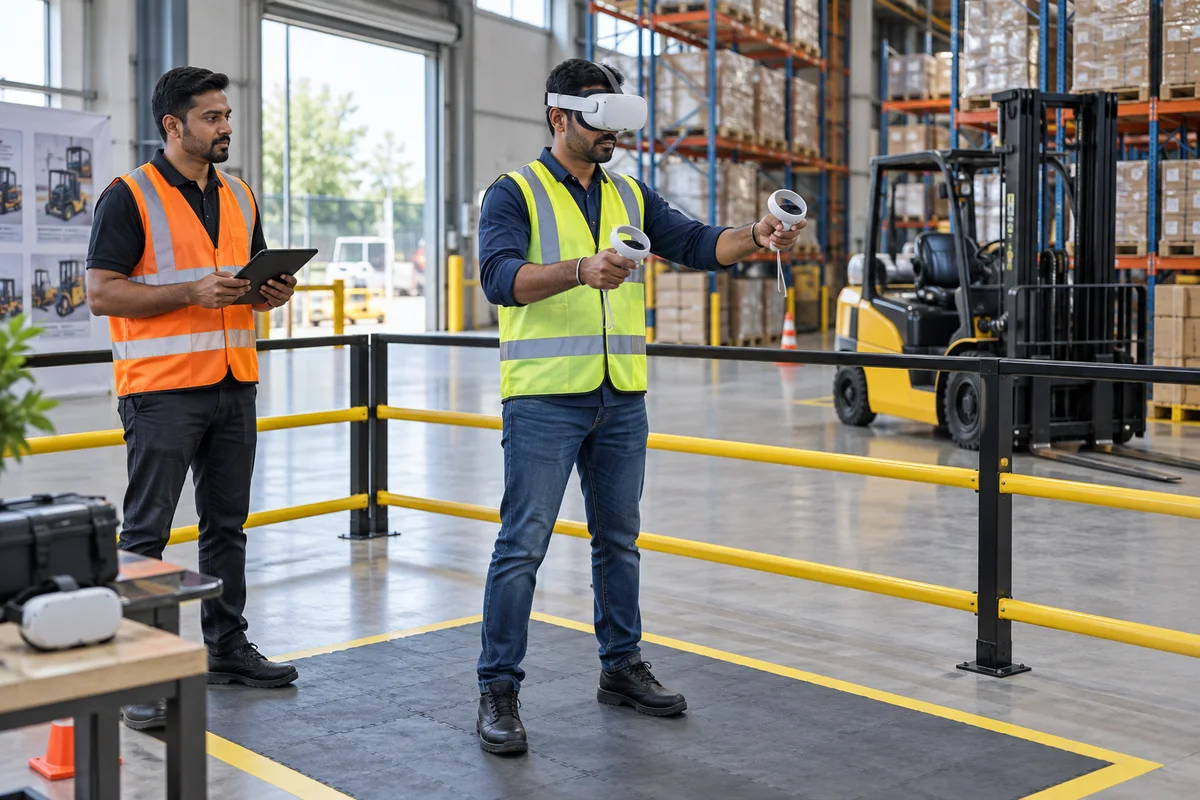
PRACTICAL USES
New starters need to learn the layout and the task while a warehouse continues operating.
Learn pedestrian routes, crossing points and restricted areas in a model of the site. New starters arrive with a clearer understanding of where goods and vehicles move.
Practise locating a bin, confirming the item and quantity, and reporting a mismatch. AR guidance can put these instructions in view during the task.
Rehearse loading checks and recognise blind spots around handling equipment. Review unsafe decisions before supervised floor practice.
PUBLISHED INDUSTRY EVIDENCE
DHL reported this result from its 2015 Ricoh warehouse pilot in the Netherlands. Workers used AR smart glasses for picking guidance; this was an operational workflow trial, not a VR training study.
Source: DHL, warehouse AR pilot (2015)External research and implementation examples. These are not measured results from Vrelab projects.
MEASURE YOUR PILOT
WHAT WE NEED FROM YOU
A warehouse layout, picking workflow, equipment routes and the errors supervisors see most often. Choose a repeatable task so results can be compared fairly.
COMMON QUESTIONS
No. VR rehearses a task in a virtual environment. AR adds guidance while someone works in the real warehouse. The right choice depends on whether the problem is preparation or support during work.
Yes. Share plans and reference photos, then have operations staff check routes, signage and procedures. Changes to the warehouse need a corresponding content update.