
Gowning and entry
Follow the site’s entry sequence and identify contamination risks. Repeat missed steps before practical gowning qualification.
Practise gowning, equipment preparation and approved task sequences without consuming production materials. Training staff can review recurring mistakes before a learner enters a controlled area.
Discuss your project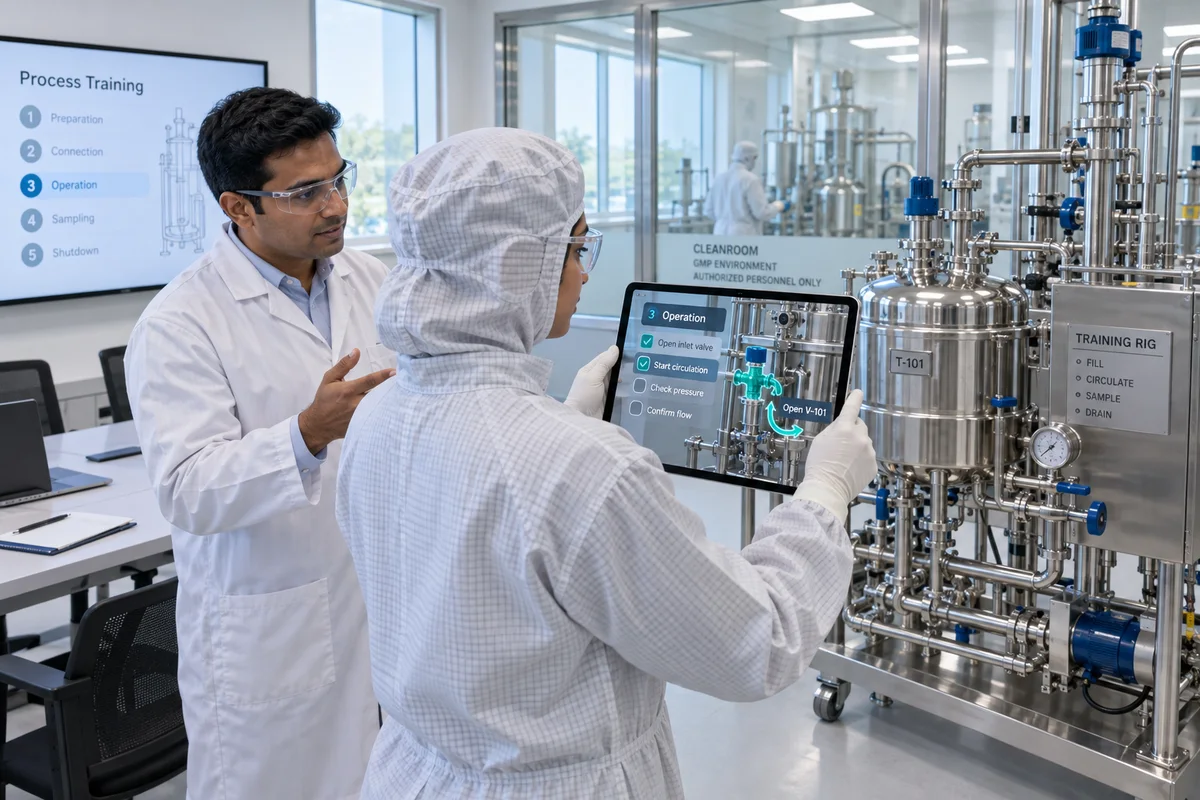
PRACTICAL USES
Controlled-area access and training consumables make repeated hands-on preparation costly.
Follow the site’s entry sequence and identify contamination risks. Repeat missed steps before practical gowning qualification.
Locate components and rehearse setup, checks and line-clearance decisions. Learners arrive at the training equipment with a clearer understanding of the sequence.
Rehearse the order of actions and recognise incorrect handling. Subject-matter experts review the content against the site’s approved procedures.
PUBLISHED INDUSTRY EVIDENCE
A 2026 pilot study compared sterile-preparation retraining in 17 pharmacy students (9 VR, 8 text). Most checklist items did not differ significantly. This is a small educational study, not evidence of better sterility or pharmaceutical factory performance.
Source: Journal of Pharmaceutical Health Care and Sciences (2026)External research and implementation examples. These are not measured results from Vrelab projects.
MEASURE YOUR PILOT
WHAT WE NEED FROM YOU
Current SOPs, equipment references and QA/training reviewers. Agree document control, approval and update responsibilities so a changed SOP does not leave outdated training in use.
COMMON QUESTIONS
No. It can support an approved training programme. Your quality system determines validation, recordkeeping and practical qualification requirements.
Completion, attempts and defined assessment events can be included in scope. Agree the fields, review process and destination system before development.