
Pre-start inspections
Find inspection points, identify visible faults and decide when to stop and report. Trainers can see which checks a learner repeatedly misses.
Rehearse controls, pre-start checks and operating decisions without using fuel or tying up production equipment. Move to the real machine under an instructor once the learner meets the agreed training criteria.
Discuss your project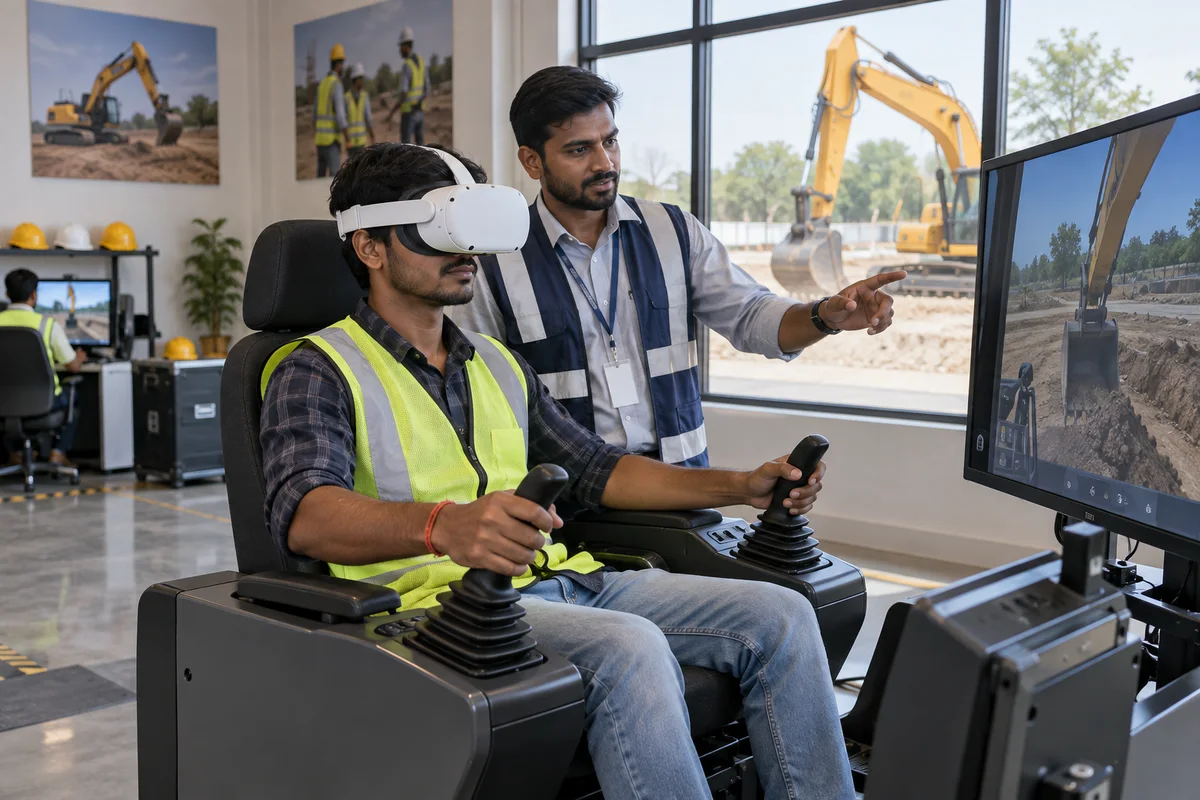
PRACTICAL USES
Basic familiarisation uses instructor time, fuel and equipment that could otherwise be working.
Find inspection points, identify visible faults and decide when to stop and report. Trainers can see which checks a learner repeatedly misses.
Repeat reversing, positioning, loading or dumping sequences in a controlled simulation. These repetitions reduce the amount of basic familiarisation needed on a working machine.
Practise the approved response to a warning, poor visibility or an unsafe work area. Use instructor-reviewed scenarios that would be difficult to stage safely.
PUBLISHED INDUSTRY EVIDENCE
Immersive Technologies reports this change for Codelco Radomiro Tomic in Chile. It describes a simulator-based training programme, not a standalone VR headset trial; the case is provider-reported.
Source: Immersive Technologies, training efficiency casesExternal research and implementation examples. These are not measured results from Vrelab projects.
MEASURE YOUR PILOT
WHAT WE NEED FROM YOU
The machine type, control references, approved operating procedures and an experienced instructor. Physical controls or a full simulator may be needed for the target skill.
COMMON QUESTIONS
No. A headset is useful for inspection, awareness and some decision practice. Control feel and machine handling may require simulator hardware and supervised live practice.
Measure how much production equipment time, fuel and instructor time the selected training task currently uses. Compare a blended training programme against that baseline.